

How To Draw 5 Point Perspective
How to describe perspective
Learning how to draw perspective correctly could change your entire drawing process. Whether drawing traditionally with pencil and paper, or digitally using a graphics tablet, I still construct fifty-fifty the most complicated scenes entirely using the draughting techniques of the horizon line and vanishing points that most people will have learnt in art class.
This might seem strangely over-complicated, when it'southward so easy to quickly mock upward a basic version of the scene using 3D modelling programs to guide your cartoon, but when you set up out a perspective cartoon by hand, you give yourself some flexibility in interpreting the method. In following and often slightly bending these rules, yous enrich the narrative composition of the image by calculation depth, drama and atmosphere. Here are some of the methods that I utilize nearly ofttimes, including one-point perspective and two-point perspective.
As well read our guide to the fine art techniques yous demand to know, and our roundup of the best how to depict tutorials.
Click on the meridian right-hand corner of each image to overstate it.
01. Identify the horizon line
(Image: © Anna Mill)
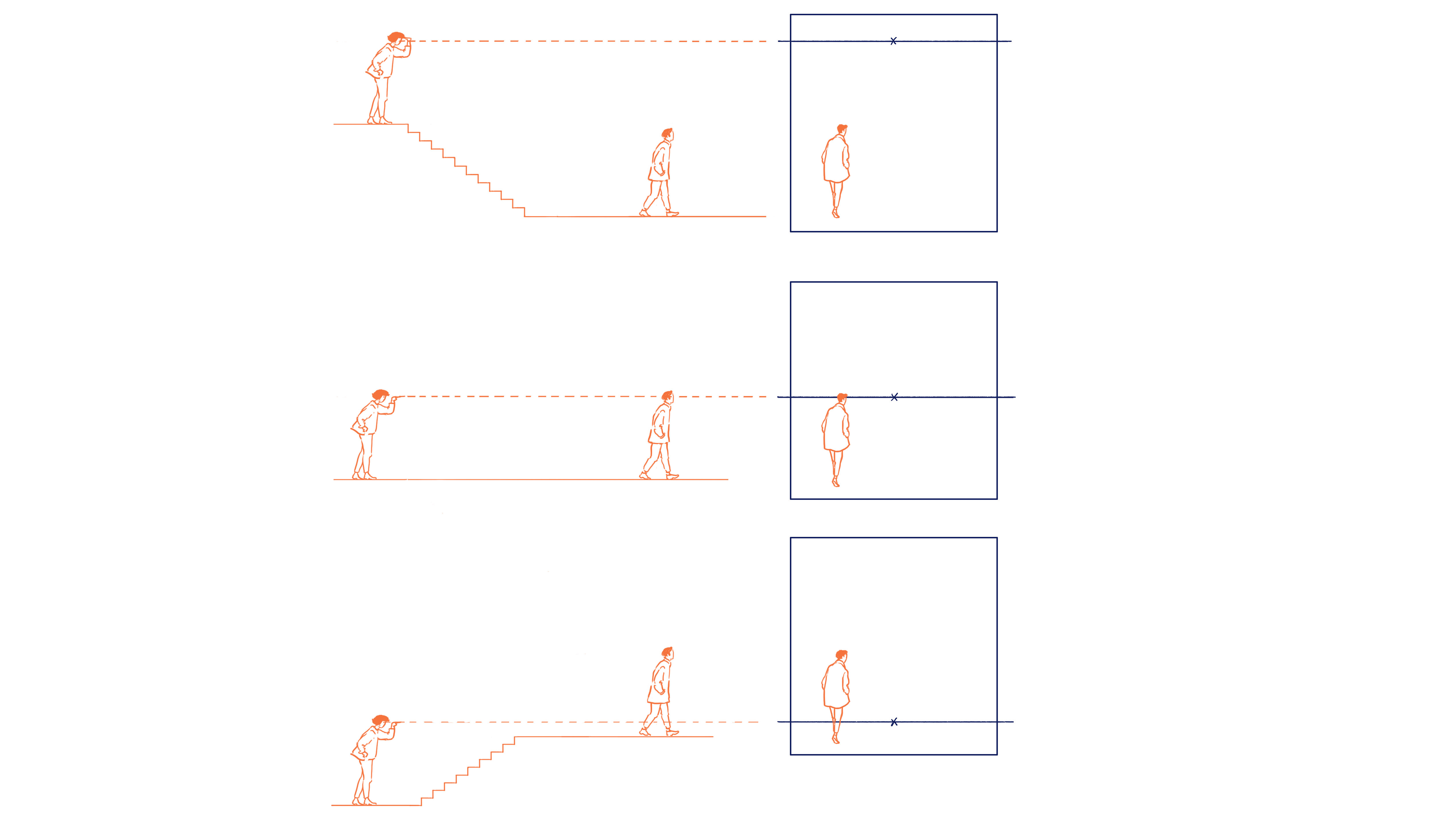
The well-nigh important decision is the placement of the horizon line in relation to the important characters and elements such every bit objects, furniture or buildings in the scene. It'southward useful to remember that the horizon is on the same level as the imagined eye of the viewer.
When y'all identify the horizon line higher up the characters, it gives the viewer the impression that they're in a position in a higher place, looking downwardly from a platform, say. If we imagine that our viewer is continuing on the same surface equally the other characters in the scene, so all standing figures in the scene will as well have their caput on the horizon line, with the exception of particularly tall or brusque characters.
If the horizon line is low, and the characters stretch high in a higher place the horizon, then it appears as if the viewer is lying downwardly on the aforementioned surface, or continuing on a lower platform looking upward. In my graphic novel Foursquare Eyes I would oft gear up the horizon line either very low or very loftier in the drawing. It seemed to fit with the tone of the book, in which the chief character is frequently dislocated and disoriented past surroundings that either loom above her or stretch abroad in inhumanly vast vistas.
02. Utilise one-signal perspective
(Image: © Anna Mill)
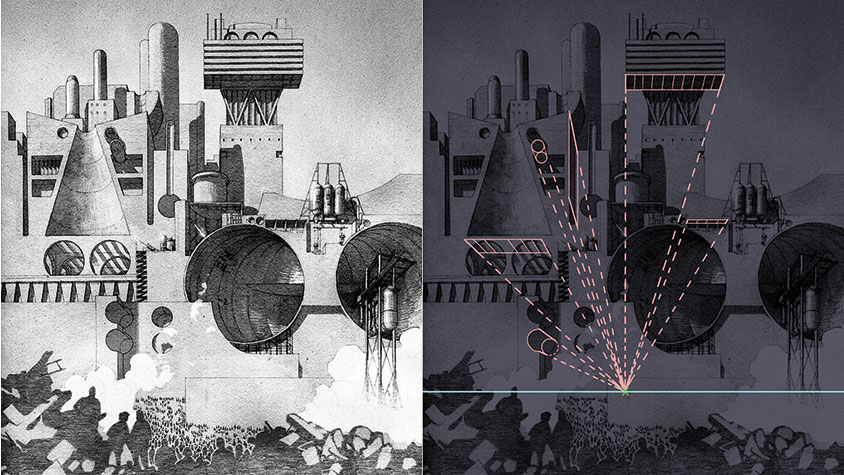
The above paradigm shows one-point perspective with the horizon line placed low in the frame, just level with the figures to show them existence dwarfed by the buildings.
In ane-point perspective, horizontal lines on whatever plane perpendicular to the betoken of view volition recede to a vanishing point that'southward located somewhere on the horizon line. Usually, I avert putting the vanishing point right in the middle of the infinite that I'm cartoon, because it tends to create too much symmetry in the view, making the composition feel static and a petty unnatural. Yet sometimes this eerie at-home can add together to the atmosphere of the scene.
03. Create two-point perspective
(Image: © Anna Manufactory)
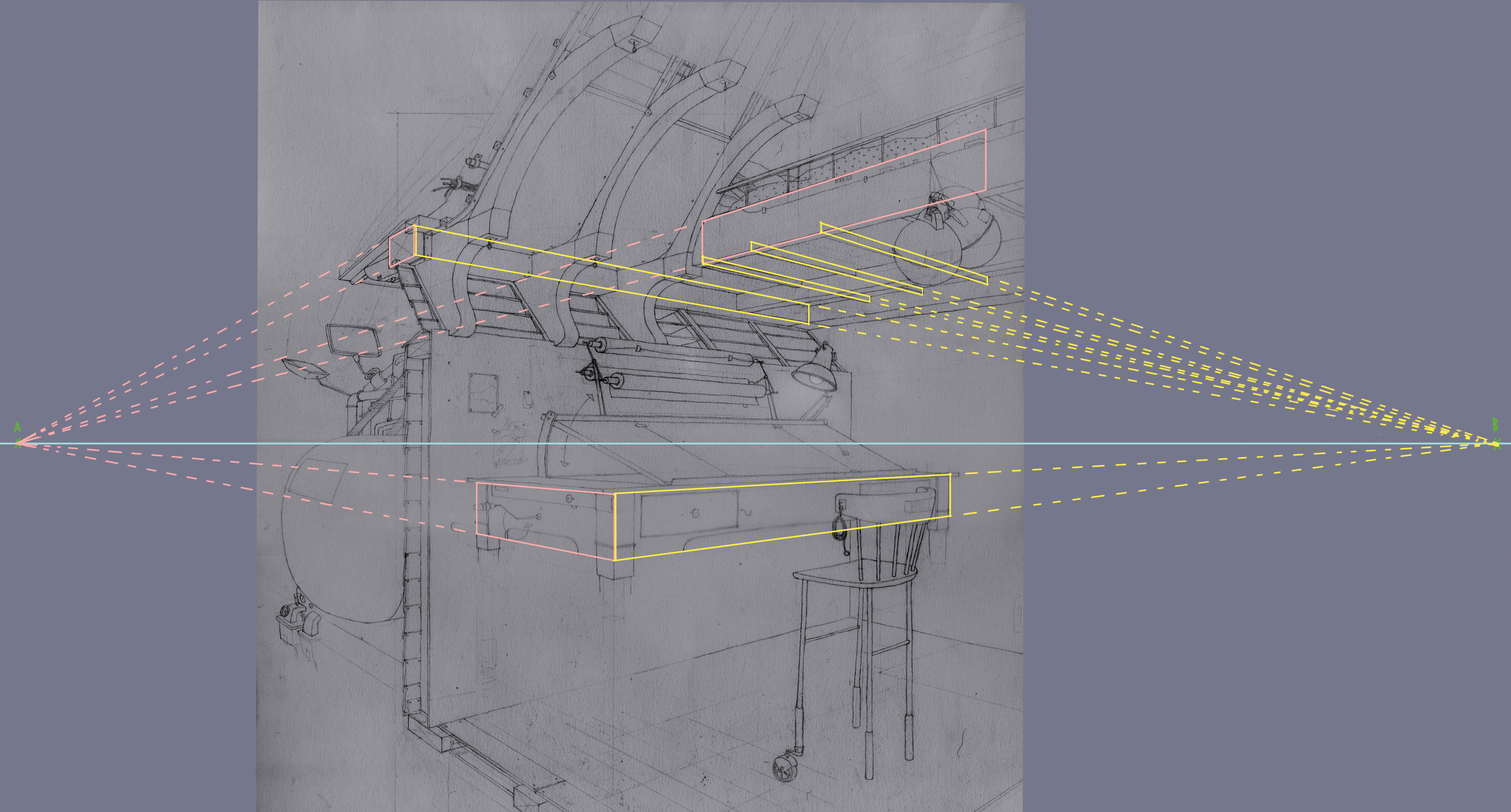
With this case of two-betoken perspective, both vanishing points are out of frame and the horizon line is centred on the epitome, giving a natural, depression-tension feeling to the scene.
When drawing 2-point perspective, I always place either one or both of my vanishing points outside the edges of the drawing. I find that when both the left and right vanishing points are inside the frame, dramatic perspective angles are created. This sometimes generates objects that look strangely stretched. For the most role however, I want a more natural field of view, and so I take intendance to locate the vanishing points in such a way that they create a practiced remainder betwixt drama and realism.
04. Up your skill using analogue tools
(Image: © Anna Factory)
I accept various sets of rulers of my own making that I use when carrying out traditional paper and pencil perspective drawing. The simplest ones are cut from mountain lath and pivot on a cartoon pin that acts every bit the vanishing point. This enables me to quickly move the ruler around the page, and know that any line that I draw confronting the draughting border volition recede to that vanishing point. This can be set up with as many rulers and vanishing points as is required, but typically I only use 1 or two at one time.
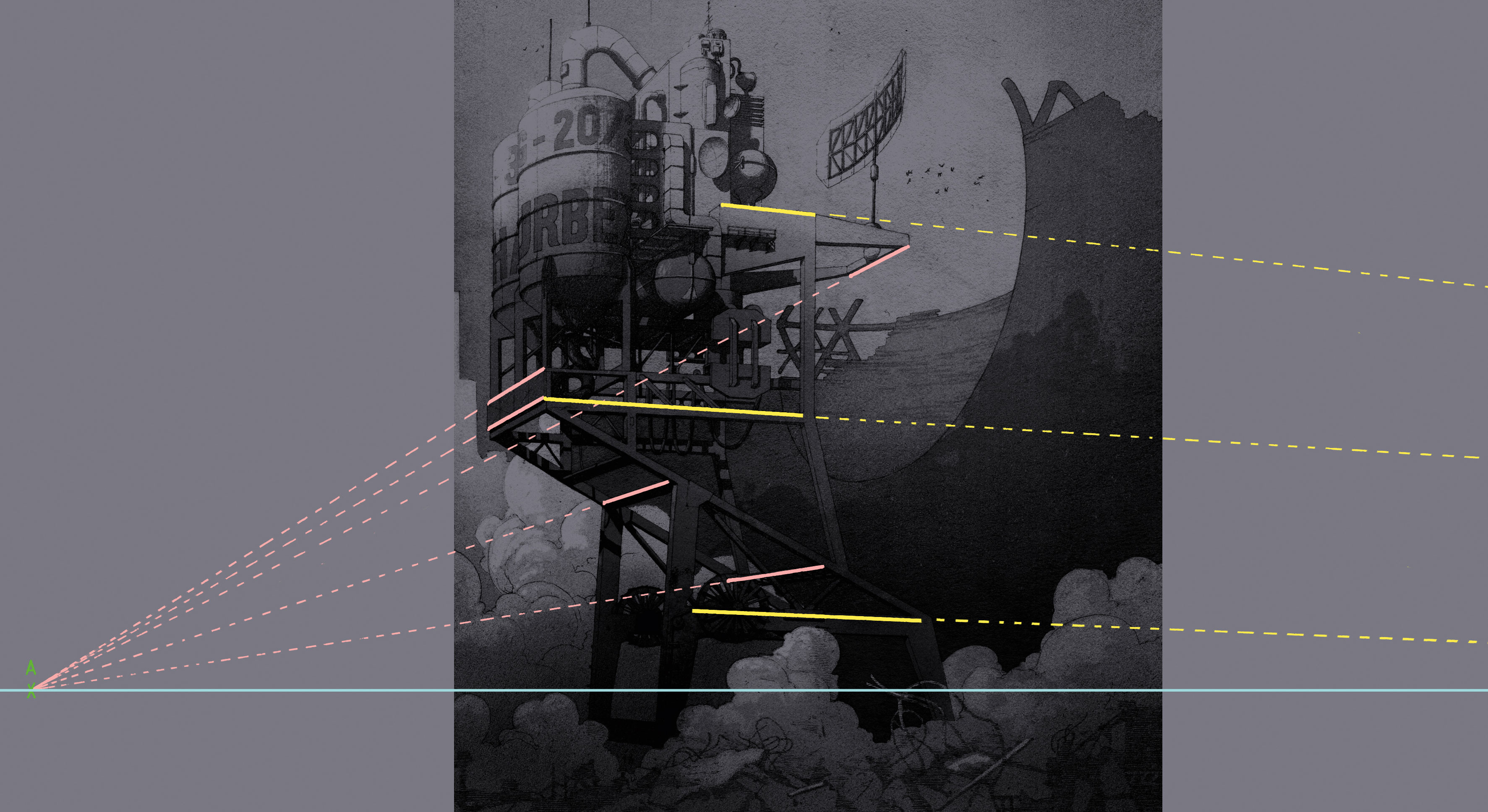
The image above shows two-point perspective with a low horizon line and vanishing signal far right out of the frame to enhance the feeling of distance and calibration. Information technology's non e'er possible to have a ruler long enough or table wide enough to allow your ruler to exist physically connected to the vanishing point. What'southward needed is a ruler that will reliably pivot nearly a indicate to which it'due south non actually connected. This was an enjoyably tricky trouble that I grappled with for many years, before finally coming up with a solution that involved fixing three rulers together, which moved around two drawing pins.
05. Dive into digital tools
(Image: © Anna Factory)
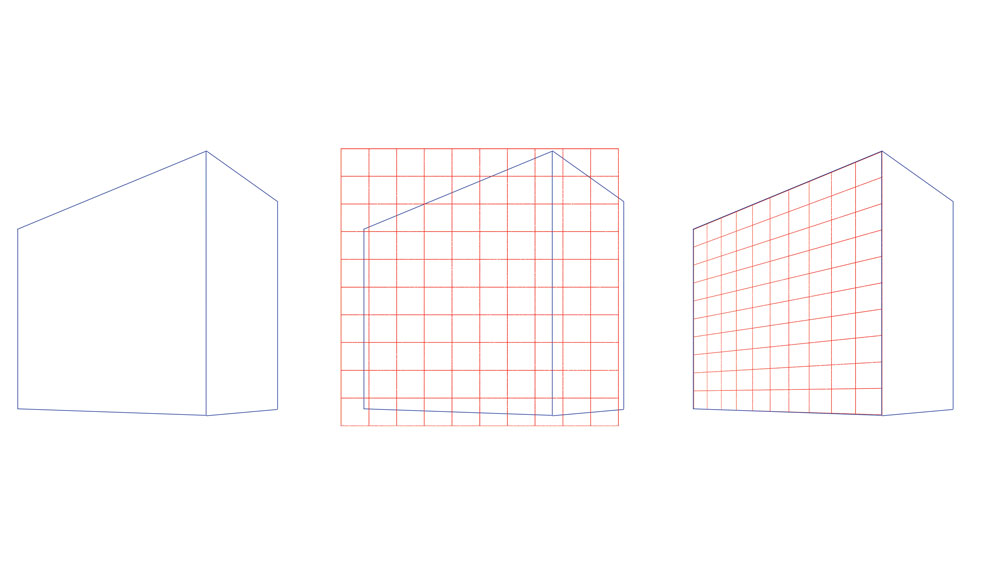
When cartoon digitally in Photoshop, I find that information technology's usually also cumbersome to expand the canvas to draw all the perspective lines receding to a vanishing indicate to the far left or right outside the scene. In this example I tend to add together a basic square grid for guidance, which I suit to the master perspective lines using the program's Skew tool (Edit > Free Transform > Skew). This usually provides enough guidance that more than detailed lines can exist drawn past eye, fifty-fifty if they don't autumn exactly on a gridline.
Drawing digitally also allows for some other timesaving shortcuts, especially when drawing repeating elements in perspective, such every bit a building that has many windows of the same size and shape. Here's my method for depicting repeating elements. First, draw 1 window and salve the file, calling it 'Unmarried Window'. Adjacent, create a new document, get to File > Place Linked... and choose your Single Window file. Add together equally many multiples of the window every bit you need, arranging them to suit the facade of the edifice that you lot are cartoon. Then relieve the file equally 'Facade i'.
Now create a new document, and Place Linked file Facade 1. Yous can now skew the facade to the perspective that y'all demand, without having to draw all the windows individually. In add-on, if you lot make a change to your Single Window file, then all the copies volition also update in the perspective view. Finally, link the facade file and skew to suit the perspective in the scene.
05. Comprehend your errors
(Image: © Anna Mill)
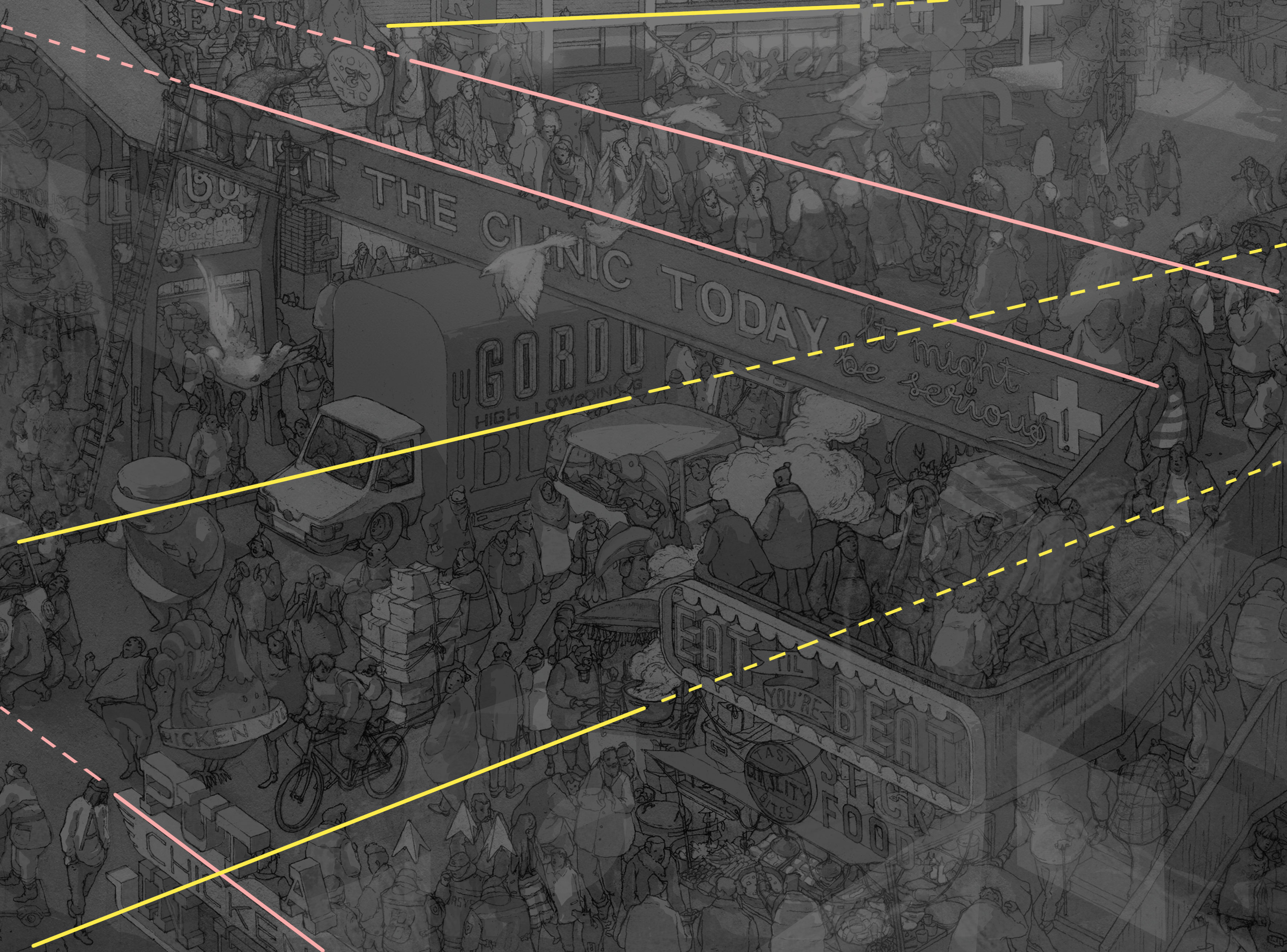
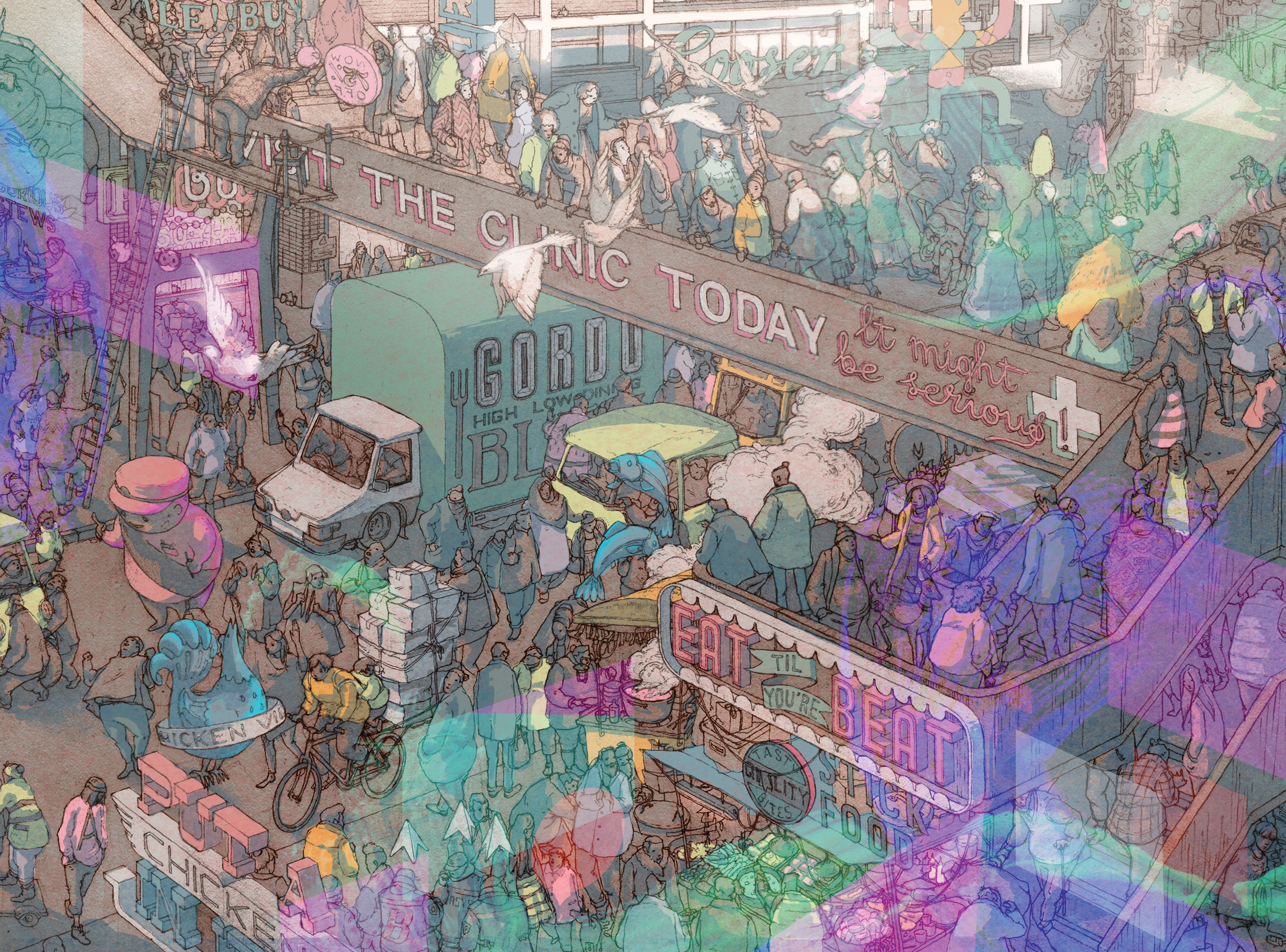
It'southward simply when some extraordinarily complex shape is required that I ever use 3D modelling software to help generate the image. This is partly from a stubborn delight in a technical drawing claiming, but as well because apart from the flexibility it gives y'all, it likewise allows for some mistakes. I feel information technology'south in these minor errors we make when we craft something by hand that some of our personality shows through in the work.
I feel like my inaccuracies are probably specific to me, and that I make the aforementioned small mistakes in similar ways over and over once more when drawing. The nearer that a draughtsman gets to robotic perfection, the less present are the signs of a human hand and heed creating those small inaccuracies that are unique to that creative person, and I believe that, fifty-fifty if it takes a picayune longer, this is something that is worth preserving.
This article was originally published in event 301 of Computer Arts mag. Purchase upshot 301 .
Read more:
- The essential guide to foreshortening in art
- Google'due south art app turns you into a masterpiece
- The all-time pencils for colouring, drawing and sketching
Related articles

Source: https://www.creativebloq.com/how-to/draw-perspective
Posted by: pappalardoyouten.blogspot.com
0 Response to "How To Draw 5 Point Perspective"
Post a Comment